
By David Rupiny
When the National Oil Palm Project started around 2002 on the island district of Kalangala, few would have imagined that over two decades later, the socioeconomic outcomes would be so much.
The Kalangala Oil Palm Project is part of the Government of Uganda’s Vegetable Oil Development Project (VODP), an initiative geared towards increasing vegetable oil production in Uganda and reducing imported vegetable.
The investment and business model
The project is supported by the International Fund for Agricultural Development (IFAD) and the World Bank, with Wilmar Plantations playing a major role.
Wilmar Plantations is the parent company of vegetable oil processor, Bidco Uganda Limited (BUL), and Oil Palm Uganda Limited (OPUL). The oil palm project uses a “4P” arrangement (public-private-producer partnership).
The model is such that OPUL manages the oil palm plantations and does the primary processing of crude palm oil, which it then sells to its sister company, BUL. The extracted palm oil is transported by water to the BUL factory in Jinja, where, through a series of processes, high-quality fats, oils, and hygiene products like soaps and detergents are manufactured.
The Uganda Investment Authority played a significant role in licensing both OPUL and BUL and has literally walked the journey from 2002 to today.
Production capacity
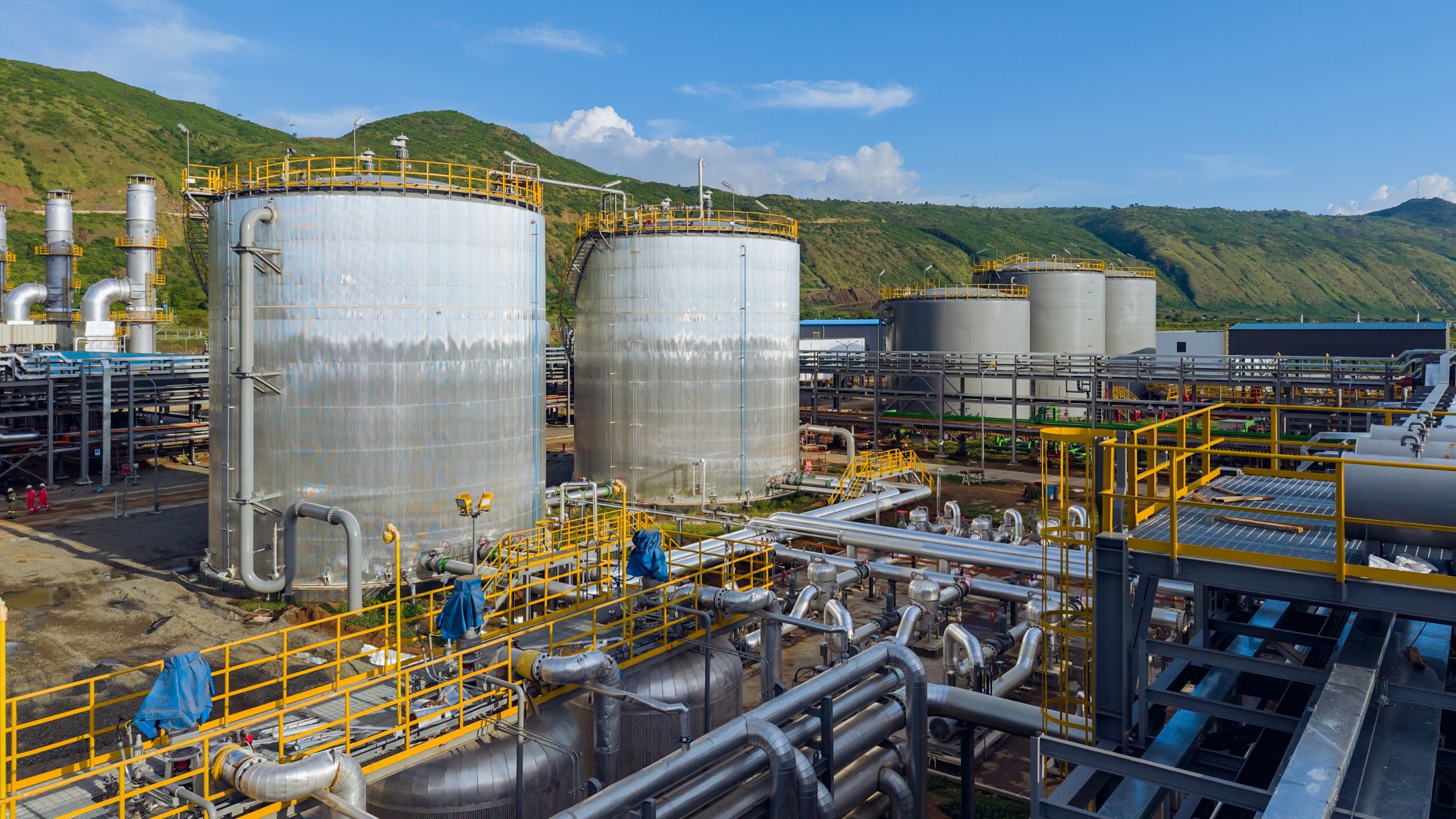
OPUL’s first palm oil mill was built in Bwendero on Kalangala’s main island of Bugala. The mill started with locally fabricated parts, and it kept being upgraded. The mill processes 20 tonnes of oil palm per hour. In a year, the mill processes 15,000 metric tonnes of oil palm.
From this first mill, OPUL has added two palm oil mills – on the island district of Buvuma and in Sango Bay in Kyotera District – all in the name of meeting the increasing demand for palm oil.
Bwanika said their production peaks in the months of March, April, and May, emphasizing that they need more oil palm to process.
Job creation
The Bwendero Mill started with just two skilled Ugandans, a few expatriates, and a local labour force. It now directly employs 75 people, one percent of whom are expatriates, as well as 11 temporary staff. Cumulatively, the Bwendero, Buvuma, and Sango Bay palm oil mills employ between 1,200 and 1,400 people
Lucrative market
A tonne of crude palm oil sells between $1,200 and $1,500, depending on the quality.
According to Eng. Simon Bwanika, the Plant Manager of Bwendero Palm Oil Mill, says there is a high market for palm oil. He says if they supply BUL with 400 metric tonnes of palm oil, it gets processed into manufactured products within just four days.
“Whatever we produce here is rapidly consumed, so I have no problem with the market,” says Bwanika.
OPUL has also now exports high-quality fatty acids to Spain and Italy for bio-diesel processing.
Community impact
Through OPUL, there has been a significant injection of money into the local economy, with the out-growers laughing all the way to the bank. Main commercial banks like Stanbic, Centenary, and Finance Trust operate branches in the district.
The company also focuses on skills transfer, the main aim being to have more local skilled manpower.
An out-grower, Deo Sseguya, says the oil palm investment’s impact is visible in infrastructure like roads, water, and electricity, new businesses, vibrant local economy, rapid urbanization, improved family housing, tourism, improved household incomes, and improved transport connectivity (by ferry and road).
“Once you grow oil palm, you earn every month just like salaried people”, says Sseguya, who revealed that an acre of oil palm generates a minimum of 650 thousand shillings ($175).
OPUL is supporting a number of corporate social responsibility initiatives. They have built roads, health facilities, schools, water facilities, and agricultural extension services.
Conducive working environment
OPUL has in place comprehensive set of human resource policies: whistleblowing, equal opportunity, corporate social responsibility, HIV/Aids, sexual harassments, workplace health and safety, child labour, human rights, environment protection, communications, alcohol control, anti-fraud, anti-bribery and corruption, and code of conduct.
Challenges
Bwanika says their major challenge is the low production of raw materials from their plantations and out-growers, making it difficult to meet demands from BUL. Other challenges include the importation of key mill spares and the poor state of out-grower roads. He appeals to the Uganda Investment Authority to help out.
***