By Shamim Saad
In the heart of Hoima City, a remarkable investment is demonstrating how innovation, sustainability, and entrepreneurship can transform environmental challenges into economic opportunities.
Licensed by the Uganda Investment Authority (UIA), in October, 15th 2020, Kontiki Bamboo Works Ltd has grown from an ambitious idea into one of Uganda’s leading bamboo enterprises, pioneering a green circular economy model while creating jobs, supporting communities, and contributing to climate resilience.
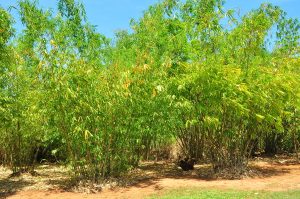
Founded in 2018 by Dr. Charles Koojo Amooti, Kontiki Bamboo Works Ltd is building a complete bamboo value chain, from seed propagation and plantation establishment to value addition and manufacturing of finished products. The company operates in Uganda’s Albertine Graben and has become a shining example of the untapped investment potential within Uganda’s agro-processing sector.
Today, the company manages over 860 acres of bamboo plantations and employs 86 workers, while positioning itself to become a regional leader in bamboo-based manufacturing.
Seeing 0pportunity where otherssaw a problem
For Dr. Koojo, the inspiration behind Kontiki Bamboo Works came from witnessing the increasing rate of deforestation and the growing demand for wood-based products across Uganda.
“We understood that bamboo is a wonder plant, a miracle plant with countless uses. We wanted a climate-resilient crop that could create social, economic, and environmental impact at the same time. Bamboo was the answer,” says Dr. Charles Koojo Amooti, Founder and Chief Executive Officer of Kontiki Bamboo Works.
As a son of the Albertine region, Dr. Koojo saw firsthand the pressures that industries such as oil and gas, construction, and tobacco place on natural forests. Rather than viewing deforestation as merely a challenge, he saw it as an investment opportunity.

“I saw a problem, but within that problem I also saw an opportunity. Uganda needs sustainable alternatives to timber, and bamboo grows faster than almost any other plant while providing a reliable source of raw materials for industry,” he explains.
What began as a vision has since evolved into a company that is attracting national and international attention for its innovative approach to sustainable manufacturing.
Building a complete bamboo value chain
Unlike many agricultural enterprises that focus solely on production, Kontiki Bamboo Works has invested in developing an integrated value chain.
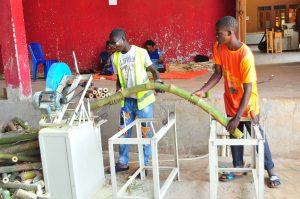
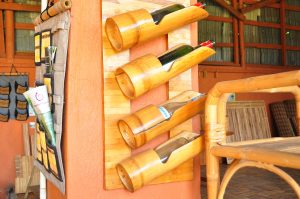
The company raises seedlings, establishes plantations, harvests mature bamboo, and processes the raw material into a diverse range of products including furniture, blinds, panels, treated poles, skewers, toothpicks, bamboo boards, biochar, and construction materials.
According to Brian Oromo, Plant Manager at Kontiki Bamboo Works Ltd, value addition is at the heart of the company’s growth strategy.
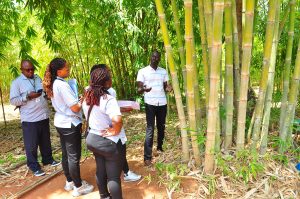
“We are transforming bamboo into a wide range of products that serve both local and regional markets. Our goal is to maximize the value of every bamboo pole harvested,” says Oromo.
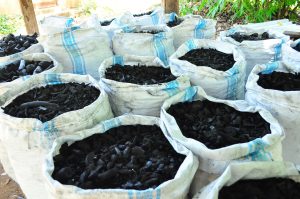
The company’s circular production model ensures that even off-cuts and waste materials are utilized. Residues from processing are converted into biochar, an environmentally friendly soil enhancer that captures carbon and improves soil fertility.
“Nothing goes to waste. Off-cuts are converted into biochar, while other residues are used in our production processes. It is a true green circular economy,” Dr. Koojo explains.
Investing in sustainable forestry
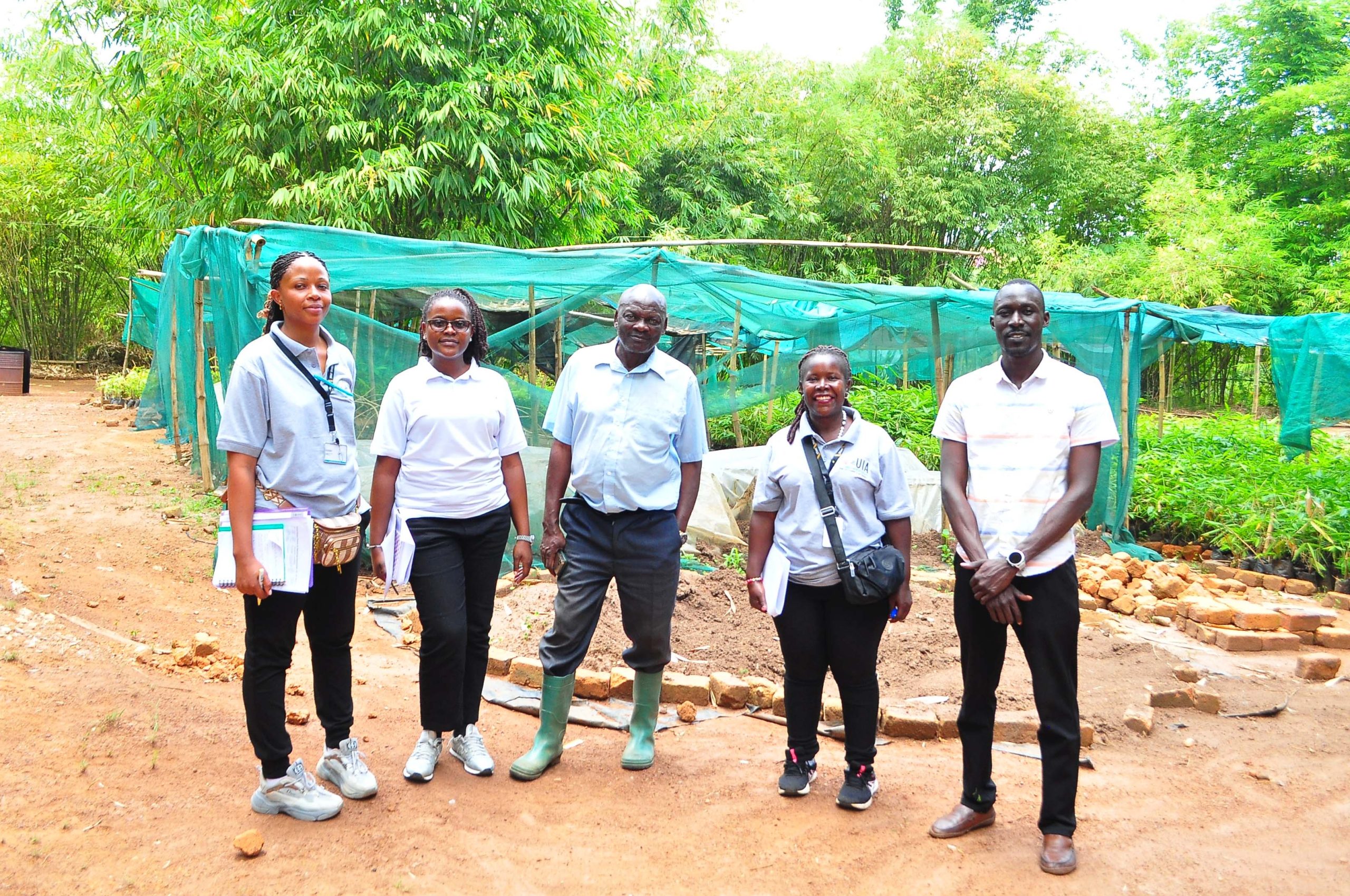
At the foundation of Kontiki’s success lies a carefully managed nursery operation that produces quality bamboo seedlings for both commercial plantations and community out growers.
Peter Asiimwe Barungi, who oversees plantation nurseries, says bamboo cultivation requires patience, expertise, and proper management.
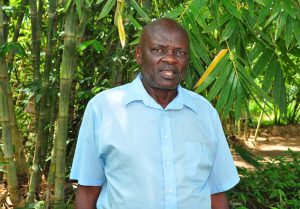
“Bamboo is unique. It is technically a grass, but it behaves like a tree. The seeds are rare because bamboo can take up to 100 years before flowering and producing seeds. Once it flowers, the plant dies, making quality seed sources extremely valuable,” explains Barungi.
Imported seeds are carefully nurtured through a rigorous process that takes approximately seven months before they are ready for field planting.
“The advantage is that bamboo has very few pest and disease challenges. Once established, it grows rapidly and can provide benefits for generations,” he adds.
A bamboo plantation reaches maturity within three to four years, after which it can be sustainably harvested for decades without replanting. This makes bamboo one of the most attractive long-term investments in sustainable forestry.
Creating jobs and empowering communities
Beyond commercial success, Kontiki Bamboo Works is generating significant social impact.
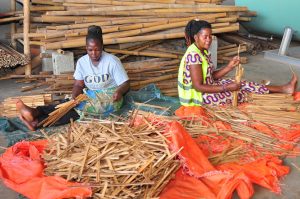
The company is working with smallholder farmers, women, and youth to expand bamboo cultivation and create alternative income streams in rural communities. Through training, seedling distribution, and out grower schemes, bamboo is becoming a tool for poverty reduction and climate adaptation.
Kontiki’s long-term vision includes a “Bamboo per Household Initiative,” aimed at encouraging widespread bamboo cultivation across communities.
The company estimates that its planned expansion could create tens of thousands of direct and indirect jobs over the next five years, while providing sustainable raw materials for Uganda’s growing manufacturing sector.
From startup to international recognition
Despite operating in a relatively new industry, Kontiki Bamboo Works has already earned recognition from international organizations and development partners.
The company has attracted collaborations with organizations such as the Food and Agriculture Organization (FAO), National Forestry Authority (NFA), National Environment Management Authority (NEMA), EACOP, and private sector partners interested in bamboo and biochar development.
One of its proudest achievements was contributing to a United Nations flagship initiative focused on combating deforestation.
The growing interest from development agencies, environmental organizations, and investors reflects the increasing global demand for sustainable products and carbon-conscious investments.
The role of Uganda Investment Authority
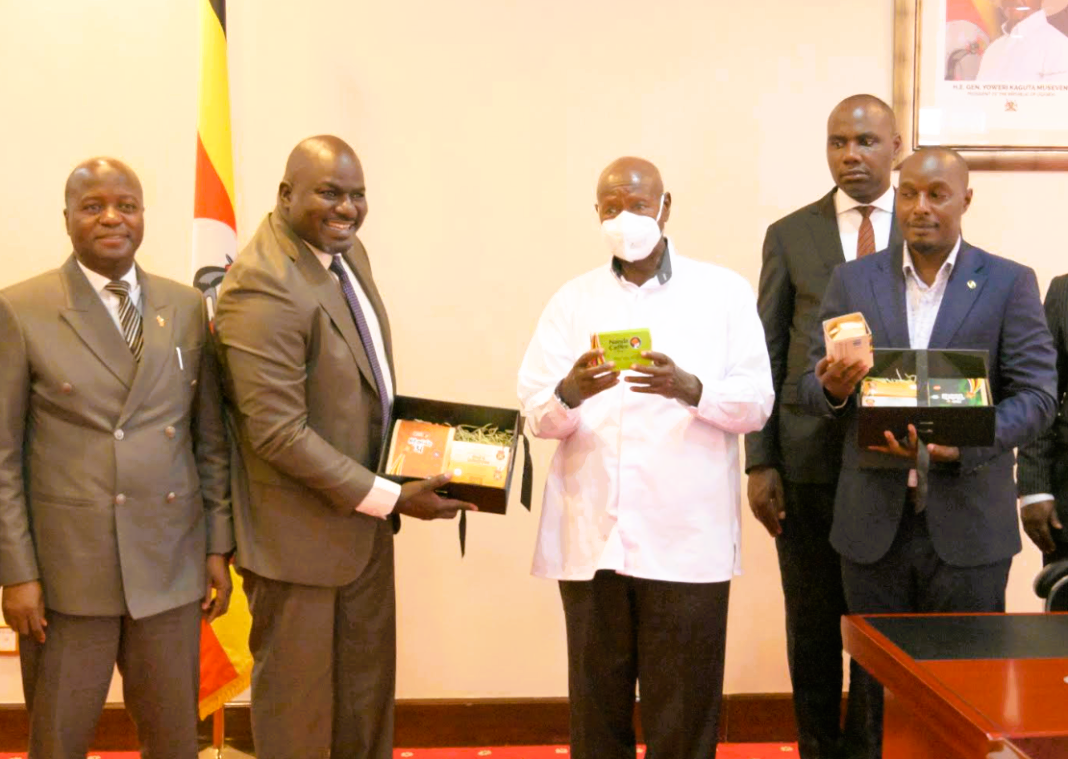
Dr. Koojo credits the UIA for providing the foundation that enabled the company to formally establish its operations.
“When I was ready to invest, I applied for an investment license from UIA and received it without difficulty. The license gave us a strong foundation as we began building the business,” he says.
While challenges such as access to capital, specialized machinery, and infrastructure remain, the company’s experience demonstrates how Uganda’s investment support framework can help entrepreneurs transform innovative ideas into viable enterprises.
The next phase of growth
Kontiki Bamboo Works is now preparing for a major expansion phase.
The company plans to increase its plantation acreage, strengthen out grower networks, and acquire advanced processing machinery to scale production of higher-value bamboo products for domestic and export markets.
Future investments will focus on bamboo-based boards, furniture, eco-poles, biochar production, and engineered bamboo products designed for construction and industrial use.
The company is seeking approximately USD 1 million in financing for specialized equipment and estimates that additional investments of USD 3 – 4 million could significantly accelerate growth and regional exports.
With growing demand from markets such as Kenya, South Sudan, and the Democratic Republic of Congo, the opportunities for expansion remain substantial.
A message to prospective investors
For Dr. Koojo, Uganda remains one of Africa’s most promising investment destinations.
“Uganda is still a largely untapped investment destination. Investors can partner with local companies and unlock opportunities in sectors that have enormous potential. Bamboo is one of those opportunities because the demand is already there. The question is whether we can scale production quickly enough to meet it.”
His vision extends beyond profits.
“We want every household to see bamboo not just as a plant, but as a source of income, environmental protection, and economic transformation. If we get the right investment and partnerships, bamboo can become one of Uganda’s next major industries.”
As Uganda continues to pursue sustainable industrialization, Kontiki Bamboo Works Ltd stands as a compelling example of how investment, innovation, and environmental stewardship can create lasting value for communities, investors, and future generations alike.
ENDS.