By David Rupiny
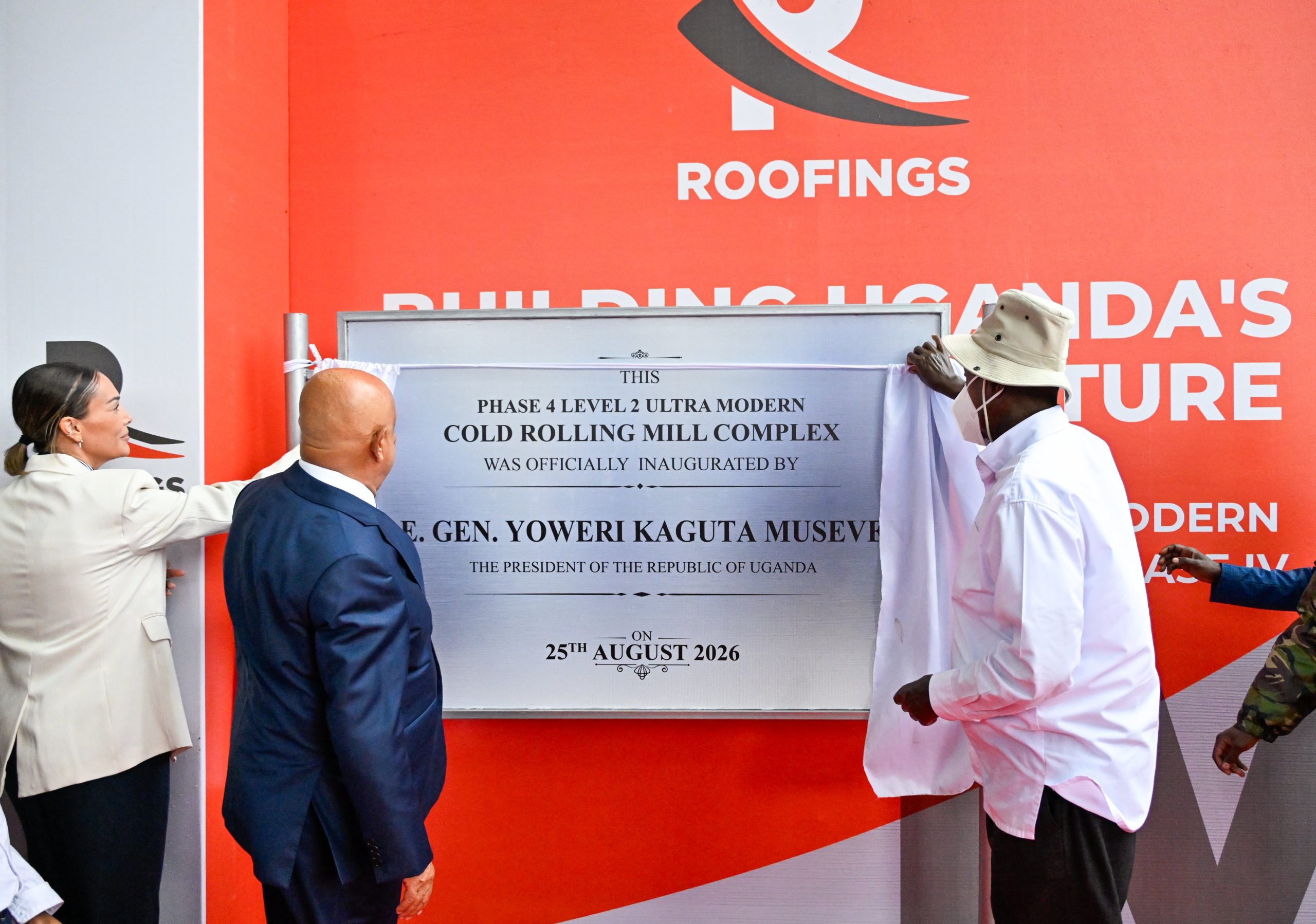
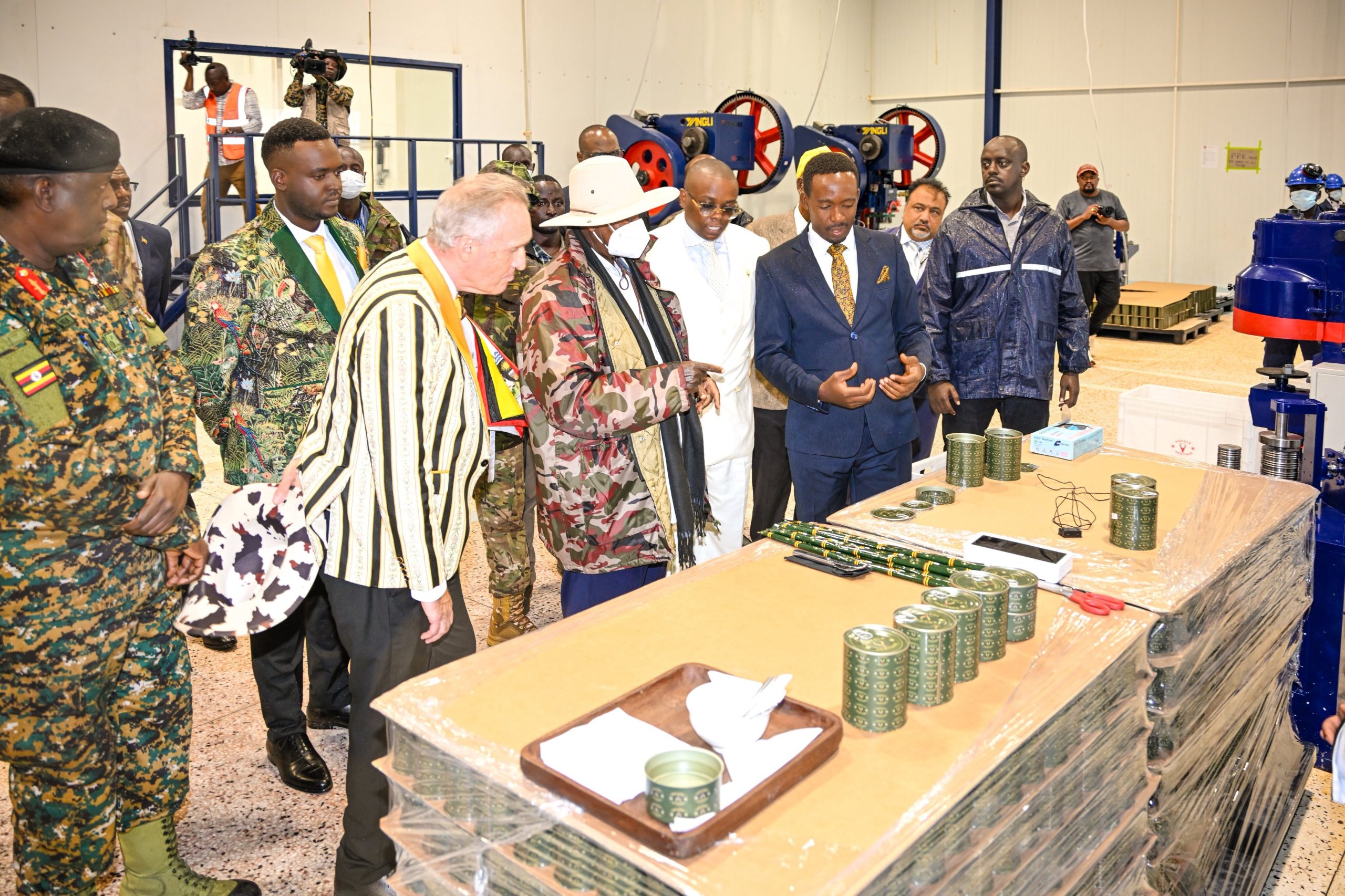
President Yoweri Museveni has commissioned a new beans and beef-canning factory, describing it as a significant boost to Uganda’s agro-industrialisation agenda under the Tenfold Economic Growth Strategy that aims to increase the GDP from the current $60.3 billion to $500 billion by 2035.
The factory, located in Kisozi in Gomba District in central Uganda, is a joint venture between the National Enterprises Corporation (NEC), the commercial arm of the Ugandan army, and a Kenyan investor, Francis Rwaga.
President Museveni said he proposed the idea of a beef-canning factory and congratulated Ragwa for his vision and initiative, and NEC for providing land for the factory.
The President assured the investors that Uganda has the capacity to supply the required raw materials for their investments.
“Our coffee, milk and livestock production continue to grow because of proper organisation, and we shall continue mobilising our farmers to produce even more.
“In this presidential term of ‘no more sleep’, every minister must be omusumba (pastor) of their sector by ensuring that investors have the infrastructure they need to succeed”, said the President.
President Museveni highlighted Uganda’s impressive growth in livestock, dairy, and coffee production, noting his pivotal role in increasing coffee output in recent years.
The President highlighted progress in Uganda’s livestock sector, saying milk production has now reached 5.4 billion litres, while the national cattle herd has expanded from three million in 1986 to 16 million today.
He emphasized the importance of greater value addition through agro-processing and advocated for stronger penetration into regional and international markets.
Further, he stressed the need to organize both large- and small-scale farmers to improve infrastructure for investors and to create sustainable markets that will drive industrialization, generate jobs, and increase farmer incomes.
President Museveni has challenged ministers and other Government officials to address the bottlenecks that are frustrating investment across the country.
“Once the Uganda Investment Authority licenses an investment, the relevant ministries, departments and agencies should ensure that supporting infrastructure, including electricity substations and other utilities, is provided in good time,” he emphasized.
On his part, Ragwa, said the development team benchmarked on facilities in eastern Europe, Russia, Brazil, and South Africa before designing a factory capable of meeting demanding international standards.
Ragwa said Uganda should build a premium global brand around its indigenous Ankole cattle, similar to the way Japan has successfully marketed Wagyu beef. He revealed plans to develop the Ankole Heritage Beef brand, establish an in-house laboratory, retail outlets, a steakhouse, and promote food tourism centred on Uganda’s distinctive cattle breed while expanding exports to premium international markets.
The managing director of NEC, Lt. Gen. James Mugira, described the investment as an important step towards industrialization, job creation, import substitution, and sustainable economic growth.
The factory requires 150 head of cattle per day, translating into an annual demand of 39,000 animals. Mugira said NEC is engaging large-scale livestock farmers and the Uganda Beef Farmers’ Association to guarantee steady supplies while getting a model for bringing on board smallholder farmers.
The Minister of Defence, Kiryowa Kiwanuka, said the factory is a strategic investment that goes beyond commercial returns, representing a major step towards industrialization, value addition, and self-reliance.
The factory is expected to provide a reliable market for livestock and bean farmers across Uganda while creating employment opportunities in processing, engineering, transport and logistics, quality assurance, and related services.
***