By Caroline Muyama
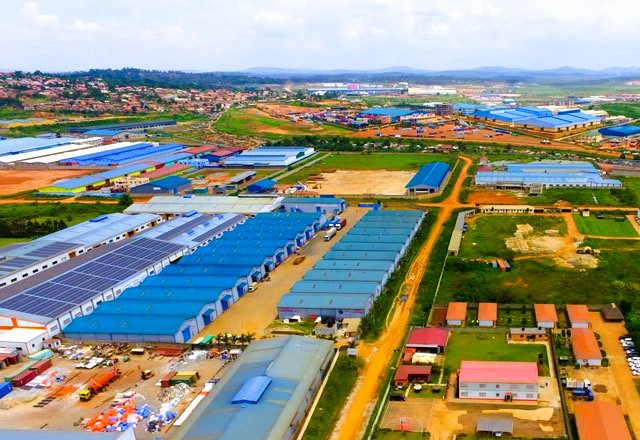
To appreciate Uganda’s industrial ambitions, one needs to drive northwest of Kampala to the historic Nakaseke District, home to the China-Uganda Liao Shen Industrial Park, popularly known as Kapeeka Industrial Park.
While Nakaseke is historically associated with the 1980s Bush War, this expansive 5.2-square-kilometre manufacturing hub has transformed the area from a quiet plantation of maize fields into a bustling center for heavy machinery and modern manufacturing.
Located just meters from Nakaseke town, the park features a thoughtful, organized layout. From the main gates, a network of wide, smoothly paved bitumen roads winds through fenced-off factory plots, specifically engineered to withstand heavy freight traffic.
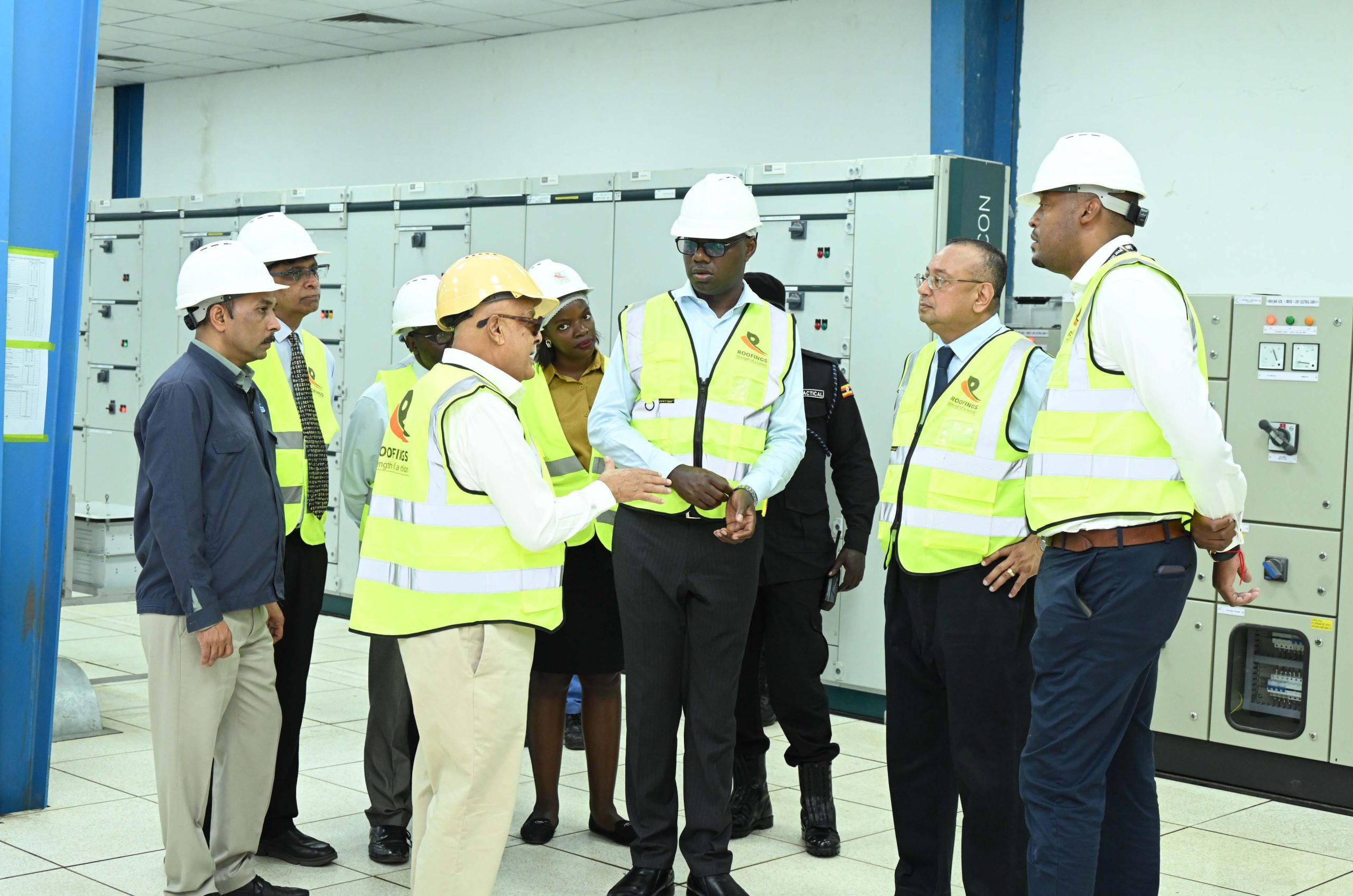
Officially opened in 2015, the park operates as a self-sustaining industrial community. It integrates an on-site 100MW power substation, a heavy-duty industrial drainage system, and a high-capacity water supply network to minimize corporate operational costs and streamline logistics.
Walking through the facility gates reveals an incredibly diverse manufacturing landscape producing more than 1,000 distinct items.
A primary anchor is Goodwill Uganda Ceramic Co. Ltd. Inside its massive production hall, automated conveyor systems continuously feed raw ceramic mixtures into high-temperature kilns, producing 30,000 to 40,000 square meters of tiles daily, equivalent to roughly 20 truckloads.
According to Administrative Manager David Mawejje, Goodwill employs more than 1,150 Ugandans alongside a team of Chinese technical experts and sources more than 90% of its raw materials, such as clay and feldspar, locally.
Down the road, Venus Industries Uganda operates a series of brightly lit, pristine assembly lines. Here, skilled local workers assemble household electronics and lighting products, including LED bulbs, fans, extension cords, streetlights, and small appliances. These goods are dispatched to a central warehouse in Kampala for domestic distribution and export to neighboring countries.
Nearby, Gocta Workwear Uganda Limited focuses strictly on technical apparel and industrial protective gear. By prioritizing heavy-duty safety uniforms over typical fast fashion, Gocta has carved out a unique niche, positioning Uganda as a competitive player in the global industrial textile market. They export their products to countries like France, Romania, Greece, and the Czech Republic.
Adding to the park’s diversity is the Hai Hui International Group, a major domestic supplier of real estate finishing hardware and ceramics. Their facility manufactures porcelain bathroom fixtures, commercial washbasins, one-piece toilet suites, and commercial tableware for local and regional markets.
Yale International Investment plays a crucial role in supporting Uganda’s agricultural sector. It uses industrial-grade equipment to clean, dry, store, and enhance maize and other grains. Acting as an essential link between smallholder farmers in rural areas and digitalized commercial grain markets, the company boosts the value of local harvests before they enter consumer networks.
While these macro-level figures are impressive, the most profound transformation is visible within the host community. Approximately 36,000 workers pass through the park’s gates daily.
Before its establishment, Kapeeka was an isolated trading center defined by high youth unemployment and subsistence farming. Today, thousands of residents earn steady wages, allowing them to support families, pay school fees, and move away from seasonal agricultural dependency.
This massive influx of labor has sparked an unprecedented local real estate boom. Entrepreneurial residents have built brick rental units and multi-storey commercial buildings to replace older mud-and-wattle structures.
Consequently, land values have skyrocketed from roughly 500,000 UGX per acre a decade ago to between 20 million and 30 million UGX today. Single-room rentals for factory workers now start at 100,000 UGX per month, guaranteeing a steady income for local property owners such as Elias Muwanga, the LCI Chairman of Namunkekera Village.
This real estate expansion is matched by a thriving hospitality sector, with a vibrant network of local restaurants serving thousands of meals daily to factory employees and construction crews.
This localized economic growth is reinforced by extensive infrastructure upgrades. The regional transport network is being systematically overhauled, highlighted by the near-completion of the Matugga-to-Nakaseke tarmac highway.
This improved connectivity has drastically reduced transit times and opened the district to broader national trade. Furthermore, rapid urban growth has brought enhanced security to the region through increased policing and well-lit thoroughfares, protecting both corporate investments and local livelihoods.
Demographically, Kapeeka has transformed into a dynamic cultural melting pot. The industrial park draws thousands of young workers from neighboring Wakiso, Luwero, Kiboga, and Nakasongola, as well as internal migrants from Northern and Eastern Uganda.
Working alongside international technical teams from Asia, the community has been enriched by a diverse mix of languages, foods, and perspectives, expanding the horizons of this former rural enclave.
On a macroeconomic scale, Kapeeka Industrial Park anchors Uganda’s strategy to shift from raw-material export to import substitution. By manufacturing tiles, electronics, and textiles domestically, the country retains vital capital. Exporting these finished commodities to Kenya, South Sudan, Rwanda, and the Democratic Republic of Congo directly narrows Uganda’s trade deficit.
Perhaps the park’s most sustainable achievement is its emphasis on localized technology transfer. When operations launched, factories relied almost entirely on foreign technicians to program and maintain complex digital control panels and automated systems.
Through structured, daily mentorship, thousands of rural youth who entered as unskilled laborers have advanced into certified technicians, operators, and logistics managers. As local capacity grows, reliance on foreign instruction is steadily declining.
As Susan Akello, a factory employee, notes: “We enter without knowing much, start with the basics, and keep improving until we can perform the most complex tasks.” Kapeeka is ensuring that the technical expertise required to sustain a modern industrial economy is permanently embedded within the Ugandan workforce.
***
Carolyne Muyama works with the Uganda Media Centre
Link to the original story: https://www.independent.co.ug/how-kapeeka-industrial-park-has-reshaped-namunkekeras-economic-outlook/