By Shamim Saad
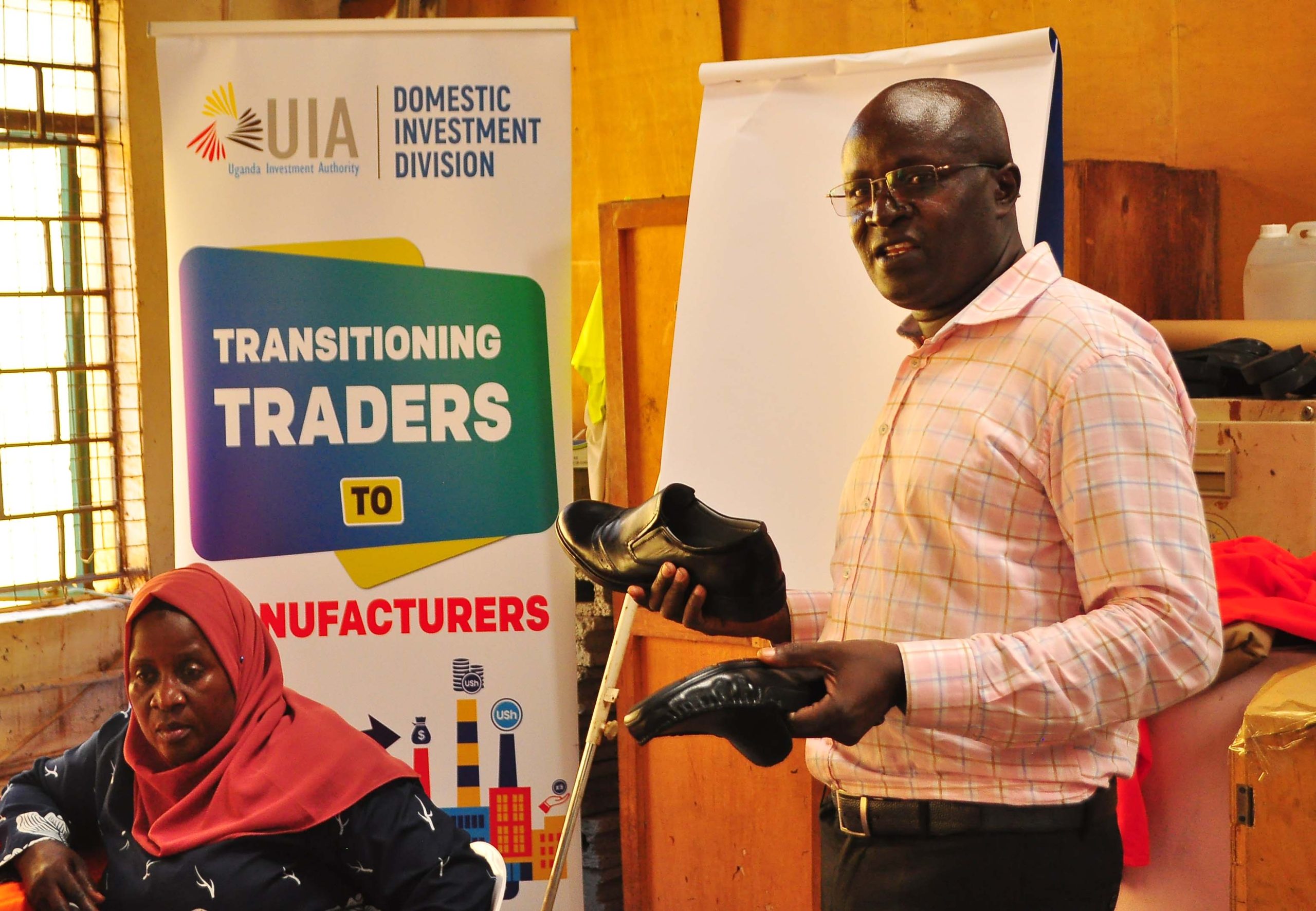
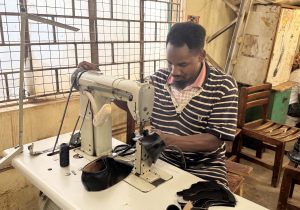
The Uganda Investment Authority (UIA), through its Domestic Investment Division (DID), has commenced a five-day intensive training program to equip over 20 local traders with practical leather shoe-making skills.
The initiative seeks to transform traders from footwear importers into local manufacturers, reducing Uganda’s dependence on imported shoes while strengthening the country’s leather value chain.
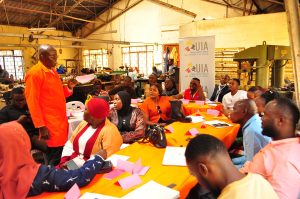
According to the Director of Domestic Investment Division, Richard Nuwenyesiga, Uganda’s footwear market remains heavily dominated by imports from Europe, China, and neighboring countries.
“Reliance on imported footwear drains foreign exchange and limits income-generating opportunities for local traders,” Nuwenyesiga said. “Yet Uganda possesses abundant raw hides and skins, alongside a growing demand for quality leather products such as school shoes, men’s shoes, and ladies’ footwear.”
He explained that while many traders possess strong marketing and sales skills, few have practical knowledge of shoe production.
“Without production skills, traders are unable to participate fully in the leather value chain, create jobs, or meet local demand with quality Made-in-Uganda products,” he added.
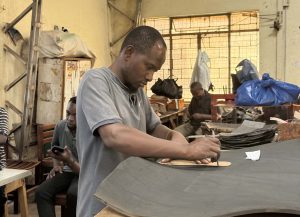
The training is being conducted by Big Leather Goods Uganda, a local leather manufacturing company, and is designed to bridge this skills gap by providing hands-on experience in leather shoe production.
Speaking during the training held at the Training and Common Facility Centre (TCFC), sixth street, Industrial Area, in Kampala the Chief Executive Officer of Big Leather Goods Uganda, Aribaruho Stephen, noted that participants are being trained in key aspects of shoe manufacturing, including leather selection and quality assessment, pattern making and cutting, stitching and assembly, lasting and sole attachment, finishing techniques, quality control, costing, and pricing of manufactured footwear.
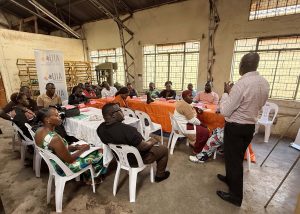
“Each participant will produce at least one complete pair of shoes during the training and leave with the patterns of the shoes they have made, enabling them to replicate the process independently,” Aribaruho said.
Trainer Emmanuel Bakubye emphasized that the program is expected to enhance local footwear production, particularly ahead of the back-to-school season when demand for school shoes rises significantly.
“The training will empower traders with practical manufacturing skills, reduce reliance on imports, increase the use of locally sourced leather, and contribute to the growth of Uganda’s leather industry,” Bakubye said.
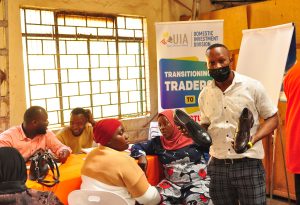
He added that the long-term benefits of the initiative include job creation, skills transfer, and increased value addition within Uganda’s leather sector.
The training aligns with the government’s Buy Uganda, Build Uganda (BUBU) policy by promoting local production, supporting domestic enterprises, and encouraging the consumption of locally manufactured products.
According to available statistics from the Uganda Bureau of Statistics (UBOS), Uganda’s leather tanning industry produces only about 1 million pairs of shoes annually, despite a national demand of approximately 25 million pairs, highlighting a significant supply gap in the local market.
As Uganda continues to pursue industrialization and import substitution, initiatives such as this are expected to play a critical role in developing sustainable local industries and creating employment opportunities for Ugandans.
ENDS..