
Agro Industrialization
Agro-industrialisation represents a transformative strategy for Uganda, aiming to boost wealth creation and inclusive economic growth by enhancing agricultural productivity and its integration with industry.
Uganda’s agribusiness sector remains a key economic driver. In FY 2022/23, agriculture accounted for 24% of Uganda’s GDP, reflecting shifts toward services and Industry and the highest in the EAC region (Source: World Bank, World Development Indicators 2024). The sector employs around 68% of the population, predominantly in rural areas.Withan average annual growth of 2% over the past five years, agriculture holds a central role in Uganda’s ambition to transition into a modern industrial economy.
Under the Third National Development Plan (NDPIII), Agro-industrialisation was designated a flagship program aligned with Agenda 2030 goals (SDGs 2 and 9), focusing on ending hunger, promoting food security, and advancing sustainable industrialisation. Uganda’s agricultural potential is immense, capable of feeding 200 million people, thanks to a favourable climate and 80% arable land, of which only 35% is currently cultivated.
In 2018, Uganda had 267 companies involved in the manufacturing of food and beverages (Source: fdi Benchmark from Financial Times). This growth aligns with the sector’s contribution to 60% of manufacturing output, with food processing alone accounting for 40% The growth reflects government incentives like tax exemptions and infrastructure improvements, boosting the sector’s capacity to meet domestic and export demand led by the European Union (EU), COMESA, and the Middle East.
Opportunities
Uganda tops Africa's coffee exports in 2025
Over the twelve months spanning June 2024 to May 2025, Uganda exported a total of 7.43 million 60 kg bags of coffee, generating USD 2.09 billion in revenue compared to 6.08 million bags in the previous period (MAAIF, 2025)
Reasons to Invest
Uganda is an agrarian economy, where agriculture serves as the backbone, employing over 70% of the population
Uganda is among the largest coffee producers and exporters in Africa, with strong recent export growth backed by favourable global prices and production increases
Uganda also has rich policies and projects to support agriculture growth. Uganda’s trade policies emphasize private sector led growth, regional integration, and bilateral ties with Europe, Britain, and China.
Abundant Labour
Uganda has a young workforce with agriculture employing over 70% of the population.
Land Availability
Approximately 80% of Uganda’s land is arable, yet only about 35% is cultivated.
Favorable Cimate & Soils
Uganda has fertile soils and favorable climate with dual rain seasons that favor multiple harvests per year
Incentives for Investors
The incentives are both tax and non-tax and subject to eligibility.
#01
Tax Holiday
10 Year Income Tax holiday for exporters of at least 80% finished goods (Free Zones) outside EAC region
#02
Duty Free Imports
Zero import duty and VAT on plant and machinery used in agricultural processing.
Duty-free import of agricultural inputs such as seeds, fertilisers, crop tools, irrigation equipment, and animal feeds.
#03
Access to land
Access to land for commercial agriculture and agro processing.
#04
Tax deductions on R&D & Training
100% tax deduction allowable on training costs and research and
development
Key agricultural products under NDP IV
Priority Products
Fruits, Passion fruits, pineapples, mangoes, apple bananas, avocados), vegetables (hot pepper, eggplants, okra), and spices. Livestock & Fisheries: Milk, beef, and fish.
Case Studies
Insights from some of the Investor journeys to achievement.
Bidco Uganda Limited (BUL)
BUL has significantly expanded its operations in Uganda, with a total investment of US$160 million in refining capacity as initially reported. By 2024, this investment had increased to US$200 million, supporting the National Oil Palm Project (NOPP), which includes a 40,000-hectare plantation in Kalangala. This plantation now produces 140,000 tonnes of palm kernel oil annually, making BUL the largest palm oil producer in Uganda.
The company collaborates with over 12,000 registered farmers as of 2024, up from 2,000 in earlier reports, contributing to an annual production value of US$3.1 million.
BUL’s operations have bolstered Uganda’s edible oil production, reducing import dependency by 15% since 2019. The company employs over 3,000 workers directly and indirectly, enhancing local livelihoods in Kalangala and Buvuma districts
[Source: Uganda Investment Authority, 2024].
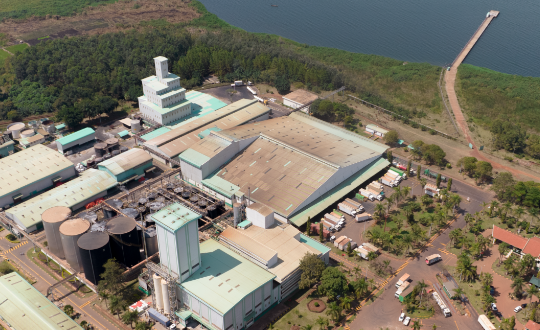

Mukwano Industries
Mukwano works with over 100,000 farmers, primarily in northern and eastern Uganda, maintaining its position as a major buyer of sunflower and soya bean crops.
The company’s installed milling capacity remains at 400 metric tons per day, processing 1.6 million metric tons of oilseeds in 2023. Mukwano has expanded its product portfolio, introducing fortified edible oils to address nutritional deficiencies, with production reaching 50,000 metric tons in 2024. The company’s soap and detergent lines have also grown, with an annual output of 30,000 metric tons, capturing 25% of the domestic market.
Mukwano supports rural economies by providing a stable market for oilseed farmers, contributing to an estimated US$50 million in farmer incomes annually.
Its out grower programs have improved agricultural practices, increasing sunflower yields by 12% since 2019
The company employs 2,500 workers directly and supports 10,000 indirect jobs through its value chain, including packaging and logistics, enhancing agro-industrial employment in Uganda.
[Source: Uganda Investment Authority, 2024].
Dive Deeper & Explore investment opportunities
Discover a curated portfolio of high-impact, investment-ready opportunities across agriculture, manufacturing, tourism, energy, ICT, and infrastructure.